

Elevate Flexi
Course - Junior
The elevate course
About Us
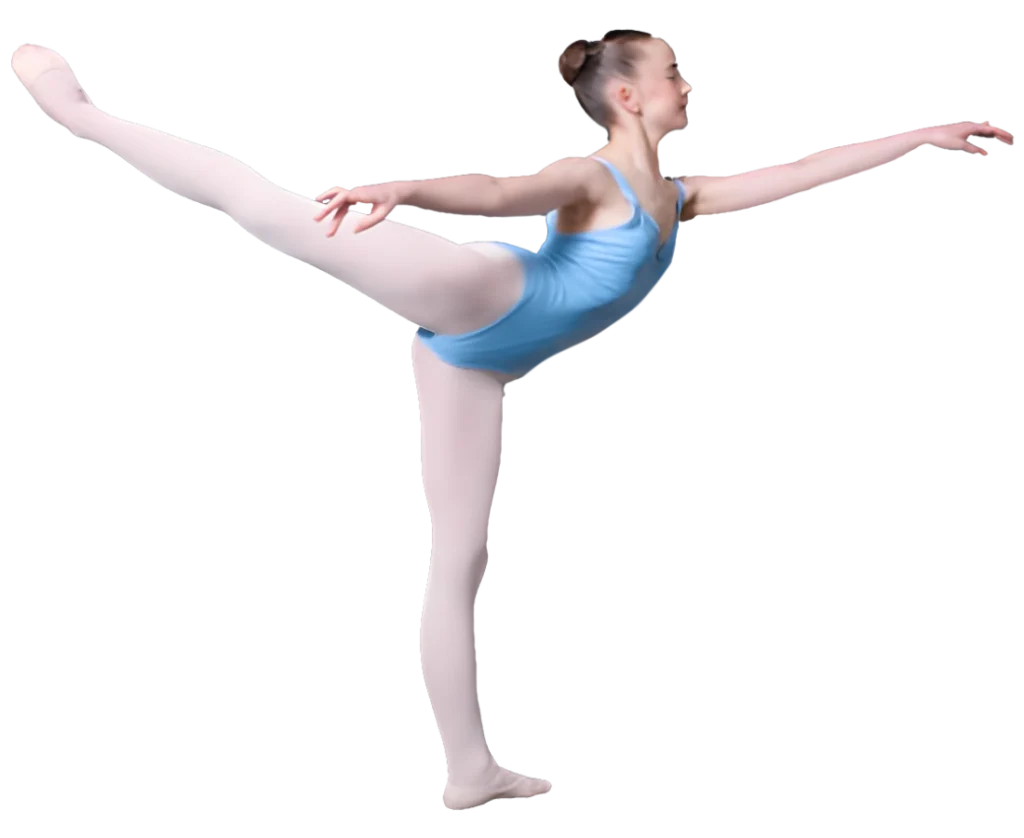
Our Elevate Junior Programme is designed for students aged 8–11 (Years 4, 5 and 6/7) who show strong potential in classical ballet and would benefit from more focused, structured training.
The programme works as a flexi-schooling model, allowing students to be released from school for training while continuing their academic studies. For Years 4 and 5, students attend one full training day per week. In Year 6/7, there is the option to increase to two days per week, with an additional training day alongside our Elevate Middles group (ages 11–14), helping to support a smooth transition into the next stage of training.
The aim of the course is to nurture and develop classical ballet technique in students who demonstrate natural ability, focus, and commitment. Training is carefully structured to build strong technical foundations, musicality, coordination, and physical development, all within a supportive and disciplined environment.
Importantly, the programme is designed to work alongside a student’s existing dance school. We encourage students to continue their wider dance training, allowing them to explore other genres while refining and elevating their classical ballet technique with us.
We work closely with schools and families to ensure a balanced approach, supporting both the student’s academic education and their vocational training.
Students enrolled on the Elevate Junior Course may also attend the Enhancement Junior Course.
Elevate Course
Core Programme
Progressive training and strong fundamentals are especially important in classical ballet because they shape everything a dancer will later be able to do safely, confidently, and with proper technique.
At ages 8–11, the body is still developing, so ballet training needs to build step by step rather than rushing into advanced movements. A progressive approach ensures that strength, alignment, coordination, and flexibility are developed in the right order. This helps prevent injuries and avoids the information of poor habits that become much harder to correct later.
Fundamentals—such as correct posture, turnout, foot placement, core engagement, and basic positions
—are the “building blocks” of ballet. If these are solid, everything else (jumps, turns, extensions, and
performance quality) becomes more achievable and controlled. Without them, dancers may progress
quickly in appearance but lack stability, precision, and long-term technical reliability.
Progressive training also supports confidence. When students master one skill before moving on to the
next, they develop a clear sense of achievement and understanding. This makes learning more
enjoyable and reduces frustration, especially in younger dancers.
Body conditioning and safe stretching are essential in classical ballet training for ages 8–11 as they support healthy growth while building the strength and control needed for good technique.
At this age, dancers are still developing, so training focuses on stability, alignment, and control rather than pushing range or power too quickly. Bodyconditioning strengthens key areas such as the core, legs, feet, and back, helping improve posture, balance, and overall control in movement.
Safe stretching is equally important and should always be gradual, well-supported, and done after proper warm-up. This helps increase flexibility without strain, teaching dancers to work with their bodies rather than forcing range. Importantly, dancers also begin to understand basic body mechanics—how joints move, how muscles support flexibility and strength, and why correct alignment protects the body. This awareness helps them train more intelligently and develop safer, more efficient technique.
Together, conditioning, safe stretching, and basic anatomical understanding create a strong, healthy
foundation for long-term progress in ballet.
Classical ballet repertoire is an important part of training for ages 8–11 because it brings technique to life
in a meaningful and engaging way, while also introducing dancers to the wider world of ballet.
Working on repertoire helps children apply the steps they learn in class to real choreography. This
improves coordination, musicality, memory, and performance quality, while also giving context to their
technical training. Instead of learning steps in isolation, they begin to understand how movement fits
together to create a dance.
It also encourages teamwork. Learning and performing pieces as an ensemble teaches awareness of
spacing, timing, and working with others on stage. Dancers develop respect, discipline, and confidence as part of a group, which are all essential performance skills.
Repertoire also introduces dancers to the history and storytelling of classical ballet. They begin to explore
famous story ballets, understand characters, and learn how movement communicates emotion and
narrative. This builds creativity and helps them connect more deeply with what they are dancing.
Costumes, music, and theatrical elements are also introduced in an age-appropriate way, helping
dancers understand how ballet is a full art form that combines technique, music, storytelling, and design.
How Flexi Schooling Works
- Definition:
The child remains registered at their mainstream school but is educated off-site for part of the week. It is distinct from elective home education, as the child remains on roll at the school. - Parental Request:
Flexi-schooling is not a legal right and requires the headteacher’s permission. Each school has discretion to decide whether to allow it. - School Approval:
If agreed, a formal arrangement is made between the school and the parent. The Local Authority does not need to approve the arrangement but remains responsible for ensuring suitable education overall. - Attendance:
Absences are recorded as authorised in line with the school’s attendance policy.
ELIGIBILITY – ELITE ATHLETES & DANCERS
Flexi-schooling is often considered for young athletes or dancers when:
• Training requires regular release from school hours
• The programme offers structured, high-quality, supervised training
• Academic education remains supported and balanced
IMPORTANT NOTES
• Headteachers have full discretion to approve or decline requests.
• There is no formal right of appeal, though decisions may be discussed further with the school.
• A clear and well-structured proposal supports successful applications.
WHAT PARENTS NEED TO DO
- Initiate the Request:
Write to the headteacher outlining the request and proposed schedule:
• Friday release for ages 8–11 (Years 4–6)
• (Optional) Thursday–Friday release for ages 10–11 (Year 6) - Provide an Educational Plan:
Demonstrate how academic progress will be maintained, including:
• Completion of schoolwork
• Independent study or tutoring
• Ongoing communication with school - Submit Supporting Documents:
• Programme information
• Weekly timetable
• Safeguarding and welfare details - Formal Agreement:
If approved, this will outline:
• Days in and out of school
• Responsibilities
• Review process (termly or annual) - Ongoing Communication:
Parents must maintain regular contact and ensure academic progress is sustained.
EXAMPLE ARRANGEMENT
A Year 5 pupil attends school Monday–Thursday and a pre-vocational ballet programme on Friday. Academic support is maintained through structured home study and communication with the school.
- All staff are enhanced DBS checked
- Trained in first aid and safeguarding
- Emphasis on respectful communication, healthy body image, and injury prevention
- Environment nurtures confidence, self-discipline, and well-being
CLASSICAL BALLET DEVELOPMENT
Course Structure
The Elevate Course runs: 30 weeks per year (3 terms of 10 weeks each)
Training
Days
Ages 8-11 – Fridays
Daily
Hours
Students will receive ballet training for 4 hours a week.
Optional
Extras
Private tuition/ISTD Syllabus work/The Enhancement and Excel Courses /Holiday courses and workshops.