

Elite Vocational 1
Lower School
ABout • Elite Courses
For Ages 8-16
The Elite Classical Ballet Course is a full-time, vocational training course for students with outstanding potential in classical ballet. Designed to nurture future professional dancers, this course offers daily instruction from a world-renowned classical ballet faculty in an inspiring, professional environment.
Students in EV1 primarily train in our home studio at Queens Mill. From Monday to Friday, students can arrive at the studio from 8.30 AM, with vocational training scheduled to take place from 9.30 AM to 3:00 PM. Our studio is sprung and fitted with a Harlequin floor, mirrors, and barres.
Academic education is delivered through a home-schooling model. The study space will be available until 7 PM each evening, providing students with a dedicated environment for online lessons if they prefer. Once enrolled in the Elite program, we can discuss providers or tutors to assist with their studies.
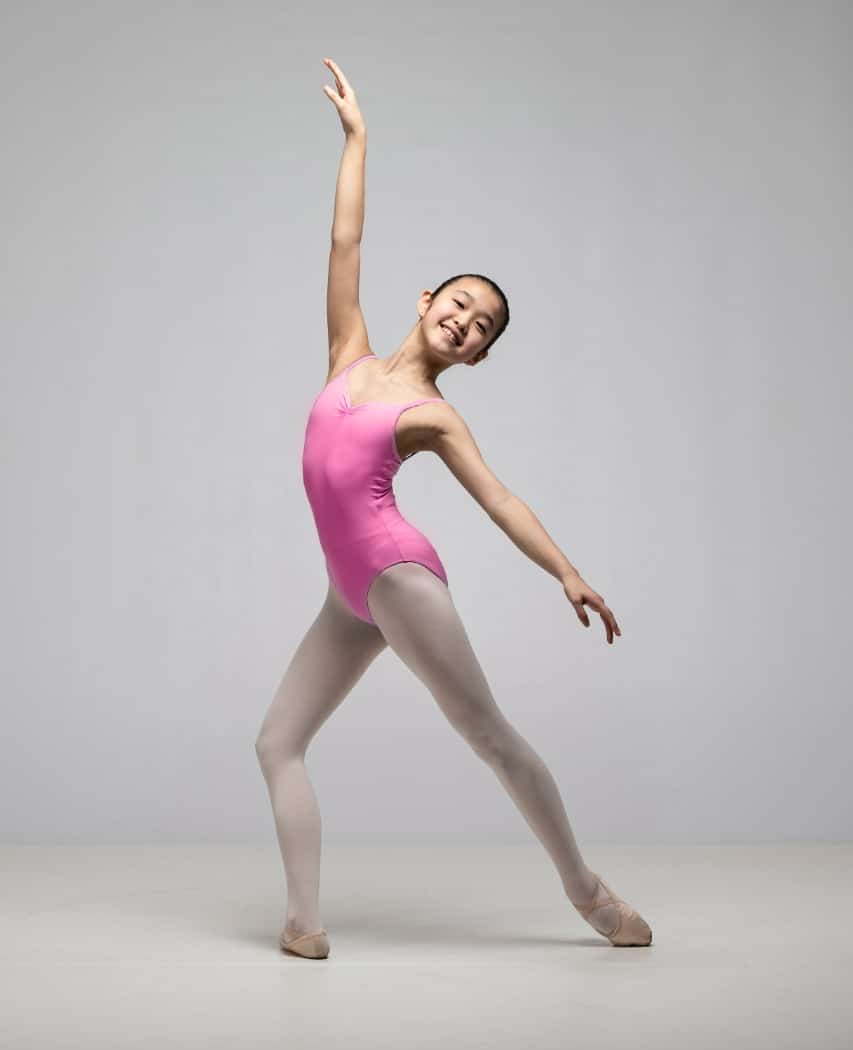
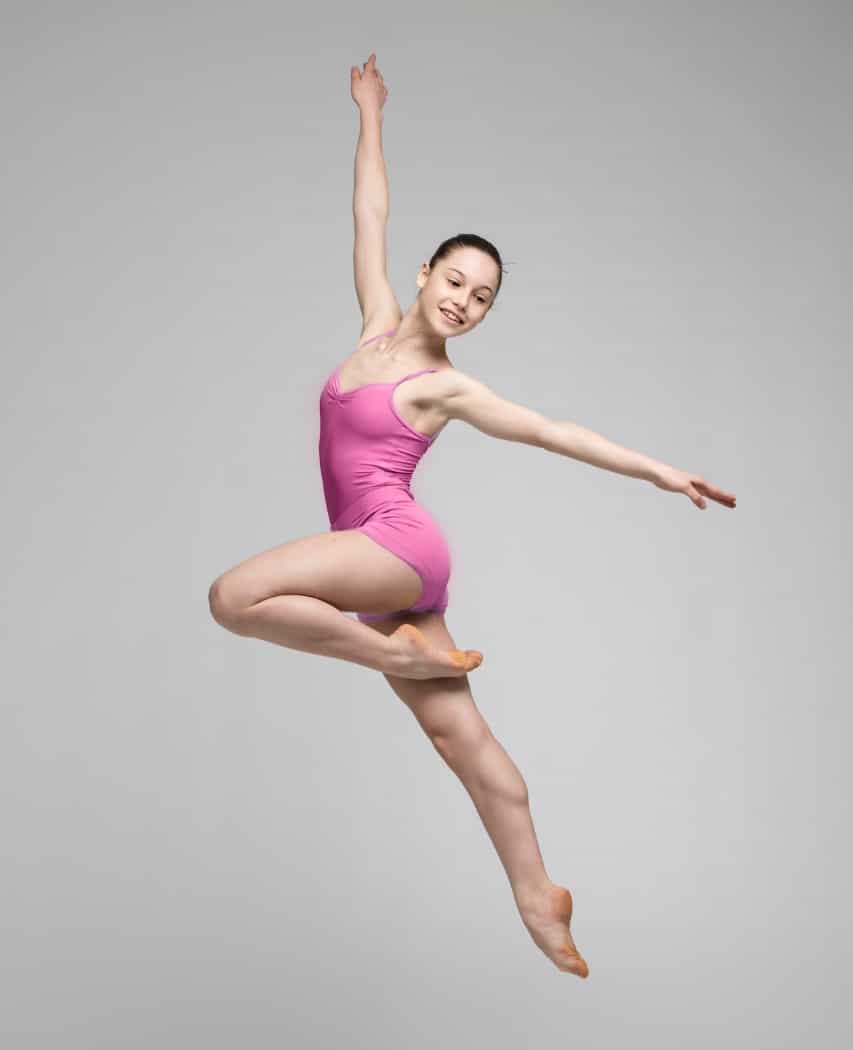

EV1 COurse
The Curriculum
The curriculum is thoughtfully designed to provide a well-rounded approach to training. Together, these elements encourage technical excellence, artistic growth, and a deeper understanding of ballet as both a discipline and a form of expression.
Personalised Body Coaching offers a targeted approach to physical conditioning, focusing on the unique needs of ballet dancers. These sessions are designed to complement dance training by improving core strength, alignment, joint stability, flexibility, and muscular endurance — all essential for safe and expressive dancing.
- Pilates for Dancers
Focuses on controlled movement, breath, and core stability. Especially useful for improving posture, turnout, and balance. - Functional Strength Training
Involves resistance exercises (e.g., bands, body weight, light weights) to support muscle tone, joint stability, and performance strength, tailored for ballet-specific movement patterns. - Flexibility and Mobility Work
Includes active and dynamic stretching to safely increase range of motion, particularly in the hips, hamstrings, spine, and feet. - Cardiovascular Conditioning
Low-impact options like dance cardio or elliptical training to improve stamina without placing undue stress on joints. - Balance and Proprioception Training
Exercises using balance boards or single-leg work to strengthen stabilising muscles and improve control and coordination. - Recovery and Release Work
Foam rolling, gentle stretching, and breathing exercises to aid muscle recovery and mental focus, vital for a sustainable training routine
Meticulous, in-depth training in classical ballet lays the strong, secure foundations classical ballet dancers need for success. Our program emphasises the repetition of essential details, secure posture, precise placement, clean lines, coordinated port-de-bras, and articulate footwork—because mastering the fundamentals through consistent, mindful practice is what enables steady, natural progression.
Working within a progressive, levelled system, teacher and student collaborate closely: we set clear goals, identify individual areas for refinement, and revisit core exercises until they become second nature. Each class layers new challenges onto solid groundwork, ensuring that strength, turnout, musicality, and artistry develop in harmony.
By combining expert guidance with a culture of disciplined repetition and constructive feedback, every dancer has opportunity to advance confidently, building the technical mastery and expressive freedom that distinguish a true classical ballet artist.
Our Classical Ballet Solo Coaching offers personalised training designed to help each dancer grow in confidence, technical ability, and performance artistry. Working one-on-one or in small groups, students learn and refine well-known ballet variations from classical works such as Sleeping Beauty, Swan Lake, and Don Quixote.
These focused sessions allow students to:
- Develop precise technical skills with detailed correction and support
- Build stage presence and confidence through performance practice
- Explore musicality, expression, and character work in depth
- Prepare for exams, auditions, or competitions with tailored coaching
- Grow their individual artistry, learning to connect emotionally with their dancing
Solo coaching gives students the opportunity to work at their own pace with expert guidance. It’s a valuable addition to their training, supporting their progression and helping them become expressive, polished, and confident dancers.
Students connect with the heritage of classical ballet through the study of famous works from the traditional repertoire. Dancers explore iconic pieces from ballets such as Swan Lake, The Nutcracker, Sleeping Beauty, and Giselle, learning how to embody the unique style, musicality, and storytelling of each piece.
Each week, students work on adapted choreography suitable for their age and level, with a focus on expressive performance, character development, and understanding the historical and artistic context of the repertoire. Classes include technical exercises that directly support the choreography being taught.
While classical technique remains the foundation of a dancer’s training, contemporary dance has become essential for dancers who wish to meet the demands of modern choreographers and companies.
Contemporary Dance Technique classes are designed to complement and expand upon classical training—enhancing both the physical and artistic range of each student.
Through this training, students:
- Gain a deeper understanding of the historical development of contemporary dance and its influence on ballet and current repertoire
- Explore anatomically informed movement, encouraging fluidity, efficiency, and greater body awareness
- Develop improvisational skills, with creativity, adaptability, and confidence in their own unique movement.
- Learn to move with groundedness, dynamic contrast, and expressivity, qualities that enrich their classical performance and prepare them for diverse professional opportunities
Contemporary classes also encourage dancers to step outside the structure of classical ballet and explore new ways of moving, thinking, and connecting with their audience. This artistic freedom allows students to become more complete performers, capable of responding to a broad range of choreographic styles, from traditional story ballets to contemporary works.
In this Creative Dance & Composition class, students develop the tools and confidence to create their own original dance work. Dancers will explore the key components of choreography, including stimulus response, use of choreographic devices, spatial design, dynamics, relationships, and structure.
Each class, students will take part in structured choreography tasks—working both independently and in groups—to create short movement phrases and complete dance pieces. They’ll experiment with music, themes, props, and visual stimuli to inspire their ideas, and gain experience in both abstract and narrative dance creation.
Students will learn to:
- Develop movement from a starting point or stimulus
- Use choreographic devices (canon, repetition, contrast, etc.)
- Make creative choices in formations, levels, and pathways
- Reflect on their own and others’ work through peer and self-assessment
- Build confidence in leadership, collaboration, and performance
These projects nurture creativity and improve critical thinking, communication, and self-expression—skills that benefit students both inside and beyond the dance studio.
By exploring the Relationship Between Music and Dance, students will discover how rhythm, melody, and musical structure influence movement and expression in dance. Through listening, movement activities, and collaborative projects, they will discover how different musical styles inspire different types of choreography. Students will also experiment with a variety of instruments—such as drums, percussion, and keyboards—to create their own music and understand how sound can guide and shape physical movement. Alongside practical work, students will learn about key composers, musical genres, and the historical connections between music and dance across cultures. This creative and interactive course builds musicality, coordination, and confidence in both music and dance.
Each class, students will take part in structured choreography tasks—working both independently and in groups—to create short movement phrases and complete dance pieces. They’ll experiment with music, themes, props, and visual stimuli to inspire their ideas, and gain experience in both abstract and narrative dance creation.
Students will learn to:
- Develop movement from a starting point or stimulus
- Use choreographic devices (canon, repetition, contrast, etc.)
- Make creative choices in formations, levels, and pathways
- Reflect on their own and others’ work through peer and self-assessment
- Build confidence in leadership, collaboration, and performance
These projects nurture creativity and improve critical thinking, communication, and self-expression—skills that benefit students both inside and beyond the dance studio.
Enhancing Expression, Storytelling & Stage Presence
Exceptional dancers must also be compelling storytellers. Our Drama classes are an integral part of the training, designed to develop the emotional depth, characterisation, and performance skills essential for a career in classical ballet.
Students explore two core areas:
1. Physical Theatre and Movement-Based Expression
- Techniques to develop expressive body language and gesture
- Use of space, timing, and physical relationships to communicate character and emotion
- Integration of drama with choreography to enhance storytelling through dance
- Improvisation and devised work to build creativity and presence
2. Text and Character Work
- Exploration of classical and contemporary scripts to understand narrative, motivation, and subtext
- Vocal training to develop clarity, projection, and emotional tone
- Creating and sustaining character through text and physicality
- Analysis of dramatic structure and how it relates to dance narratives
Throughout the course, students participate in practical workshops, performance tasks, and reflective exercises, all carefully aligned with the cognitive and emotional maturity of each age group.
These workshops educate young dancers with essential skills and knowledge in Nutrition, Injury Prevention, Mindfulness and Mental Health.
We are proud to be a member of One Dance UK, the national body for dance. This membership reflects our commitment to delivering the highest standards in teaching, dancer health, and safeguarding. Through this professional affiliation, our pupils benefit from up-to-date, evidence-based practices in injury prevention, physical conditioning, and mental well-being. It also connects us to a wider network of dance professionals and opportunities across the UK, helping our students stay inspired, supported, and prepared for a future in the industry.
Building Strong Foundations for Healthy, Informed Movement
We believe that a dancer’s body is their most vital instrument. To support safe, effective, and long-term training, we deliver a tailored Anatomy and Physiology program that is specifically designed for young dancers.
This unique study programme is age-appropriate and progressive, ensuring students learn the right content at the right time in their physical and educational development.
Students explore key topics such as:
- The skeletal system: learning the names, locations, and functions of major bones
- The muscular system: understanding how muscles work, including key muscle groups used in ballet
- Joint function and flexibility
- Posture and alignment
- Injury prevention and safe dance practices
- How anatomy relates directly to technique, strength, and performance
Classes are interactive and engaging, using a combination of visual aids, physical demonstrations, movement analysis, and academic study. Students are encouraged to apply their knowledge directly to their dance practice, helping them to understand how their bodies move—and how to care for them as elite-level athletes.
By understanding the “why” behind their training, students become more body-aware, confident, and technically precise, setting them up for success in both performance and long-term physical health.
CLASSICAL BALLET DEVELOPMENT
Course Structure
Each term has a different focus for the students to engage with.
Together, these elements encourage technical excellence, artistic growth, and a deeper understanding of ballet as both a discipline and a form of expression.
Classical
Solos
Autumn Term
The Autumn term has a FOCUS on learning and developing the technique and artistry to perform a classical solo.
Choreography Projects
Spring Term
The Spring term has a FOCUS on choreography projects, students are encouraged to develop their creativity, working together to enhance teamwork skills and discover new ways of expressing movement.
Classical Repertoire
Summer Term
The Summer term FOCUS includes an exploration of classical repertoire, giving students the opportunity to connect with traditional works while deepening their artistic expression.
EV1 COurse
Term Dates
- Autumn Term 2025
Starts: Monday 8 September 2025 Half term: Monday 17 October- Friday 7 November 2025 Ends: Saturday 6 December 2025
- Spring Term 2026
Starts: Monday 5 January 2026 Half term: Monday 16 February - Friday 27 February 2026 Ends: on Saturday 28 March 2026
- Summer Term 2026
Starts: Monday 13 April 2026 May Day: Monday 4 May 2026 Half term: Monday 18 May - Friday 29 May 2026 Ends: on Friday 17 July 2026
EV1 COurse
Uniform List
- All Students
MIBE Tracksuit MIBE T Shirt/Polo Shirt
- Equipment
MIBE Exercise Mat, MIBE Yoga Ball, MIBE Thera Band
- Female Dancers
Students shall need canvas ballet shoes, Ballet tights and pointe shoes (when ready).
Uniform Leotard, Uniform Skirt, Uniform Shorts, Uniform Character Skirt, Uniform Black Tutu - Male Dancers
Students shall need white canvas ballet shoes and white ballet socks.
Uniform Leotard, Uniform Shorts/tights
CLASSICAL BALLET DEVELOPMENT
Our Courses

Elite
Full Time Vocational Training

Enhancement
Associate
Course

Embrace
Ballet
Company

Enrichment
Workshops &
Holiday Courses

Elite
Full Time
Vocational Training

Embrace
Ballet
Company
Enhancement
Associate
Course

Enrichment
Workshops &
Holiday Courses
